


Republican Women of Clifton is a group of enthusiastic women keen on political awareness and education, community improvement, and advancing Conservative values and ideals in the governance of our great State of Virginia.
We work together to elect Republican candidates who seek local, state, and national offices. To that end, we maintain a robust calendar of events and program activities designed to educate, equip, and empower our members and guests.
Our club offers connection for members who live in Clifton, Fairfax Station, Springfield, and surrounding communities.
We invite you to find out more ABOUT RWC and then come join us. Either register to attend an upcoming event OR just go ahead and become an RWC member - JOIN NOW.
 About Us
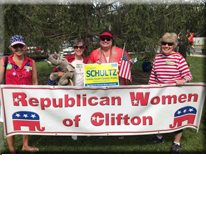
The Republican Women of Clifton (RWC) is an active, fun, and conservative group of women formed in September 2006 in the Town of Clifton, Virginia. We have a desire to promote conservative values and support Republican candidates and elected officials in Fairfax County, VA.
RWC's monthly meetings and events present provocative speakers who share unique insight on a variety of politically-related topics and current issues. Our Candidate Support program focuses on electing and supporting Republican candidate campaigns. Our Caring for America programs support military troops, veterans, and local communities.
We are Northern Virginia women interested in volunteering time and passion to promote Republican causes and ideals. We come from all walks of life and all age groups. We live in Clifton, Fairfax Station, Springfield, Manassas, Centerville, and then some. We are professional women, retired women, veterans, mothers, daughters, sisters, aunts, and wives.
We offer an Associate Membership that is suitable for either men or for women who belong to another Virginia Federation of Republican Women (VFRW) organization. Our connection is our shared belief in the mission of RWC and the desire to Keep Virginia Red!
RWC is a member of a network of republican women's organizations affiliated with the Virginia Federation of Republican Women (VFRW) and the National Federations of Republican Women (NFRW). Members of RWC are also members of both VFRW and NFRW.
 Events
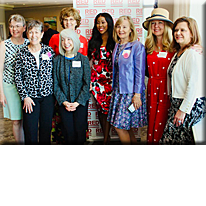
The Republican Women of Clifton is a political club and invites presenters to speak on issues of the day. By definition, some of those topics are and will be controversial. By inviting speakers, our club does not necessarily endorse the views expressed by any speaker. We believe in free markets and the free exchange of ideas. We welcome the expression of those ideas in fair and civil debate in the public square.
The club holds meetings on the third Wednesday of the month and takes a summer break during the months of July and August.
 Membership
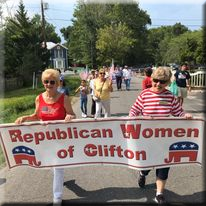
Republican Women of Clifton (RWC) is a working organization that donates volunteer time and raises funds for Republican candidates, community programs, and projects while keeping members informed on political activities and elections.
We invite you to fill out and submit a membership application. You have the option to complete the membership form and pay online (a processing fee will be added) OR complete a printable form to mail with a check. Mailing instructions are on the printable form.
Primary Member ($50 per year) - Full privileges of membership in RWC, Virginia Federation of Republican Women (VFRW), and National Federation of Republican Women (NFRW). Primary members receive full voting rights and privileges in RWC.
Associate Members ($20 per year) - Available to either women with a Primary membership in another local club, women of a federated Republican women's club who want to also support RWC, or men who are Republican and want to support RWC, such as spouses of RWC members. Associate members do not hold voting rights.
Student Members ($10 per year) - Any young women.
 Elections
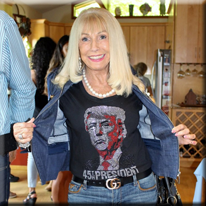
One of the most important political activities of Republican Women of Clifton (RWC) is working to elect Republican candidates to local, state, and national public offices. We raise funds to donate to candidates and causes. We give hours of volunteer time working for Republican candidate campaigns and that is perhaps RWC's greatest contribution.
Whether it is volunteering to answer phones, send out mailers, block walk for candidates, work at special events, distribute campaign signs, or serve as precinct captains and election officers, RWC members turn out to support Republican candidates. Frequently, we run for office ourselves and that includes non-partisan offices such as a school board member.
If political advocacy is your interest, RWC invites you to JOIN US in helping Republican candidates win. Our goal is to Keep Virginia Red!
 Programs
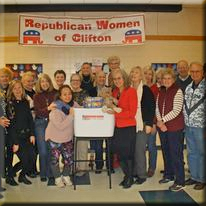
It is true the foremost activity of Republican Women of Clifton (RWC) is working to elect Republican candidates who seek office. The effort is achieved through RWC's Candidate Support program, which provides the framework for fundraising and candidate support activities.
Not all of what RWC does is political. There is another side to RWC that focuses on the causes we believe in - such as, supporting our veterans, military troops, and caring for our local community. Those efforts through which we strive to make positive difference in our communities often fall within our Caring for America Program and the Mamie Eisenhower Literacy Program.
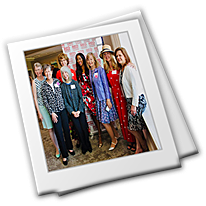 Photo Album
If you want to see what kind of events and activities we have, check out the photos of past events.
 Reference
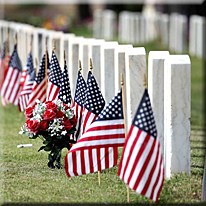
This section contains information about current news, RWC documents and links of interest.
 Members Only Portal
This section is password protected and contains information available to members only.

